
In Memoriam: Maurice "Mo" Jourdane

Photo, above: Maurice "Mo" Jourdane speaks at CRLA's 50th anniversary celebration of the El Cortito victory, June 2025.
CRLA President and CEO Jessica Manriquez Jewell shared the following letter with all staff Wednesday, September 9, 2026.
Dear CRLA,
As you may have seen over Labor Day weekend, attorney and activist Maurice "Mo" Jourdane died on Saturday, September 5th at the age of 83.
Mo was instrumental in planting CRLA's strong roots in rural justice, most notably through his work on impact litigation cases that banned El Cortito, the short-handled hoe that crippled so many farmworkers, and stopped discriminatory IQ tests that denied educational opportunities to Spanish-speaking schoolchildren. He dedicated his career to justice and through his advocacy catalyzed far-reaching change that has impacted generations of California's students and workers.
When I spoke to Olivia Flores Jourdane, his wife and partner for over 40 years, she shared with me how much Mo loved CRLA—she said working here was his favorite job—and how much he loved his work alongside farmworkers. We reflected that Mo would continue to be with us because his legacy and his impact will continue to live on.
Influence on CRLA's Community Lawyering Model
Mo joined CRLA first as a summer law intern in 1967 in our McFarland office. After a summer spent learning from the farmworker movement, he returned for his final year at UC Law San Francisco (formerly UC Hastings) where he wrote a law review article challenging the constitutionality of exempting farmworkers from the National Labor Relations Act. After learning he could combine his passion for surfing with his commitment to farmworker justice by working in CRLA's Salinas office, Mo joined us full-time in 1968. 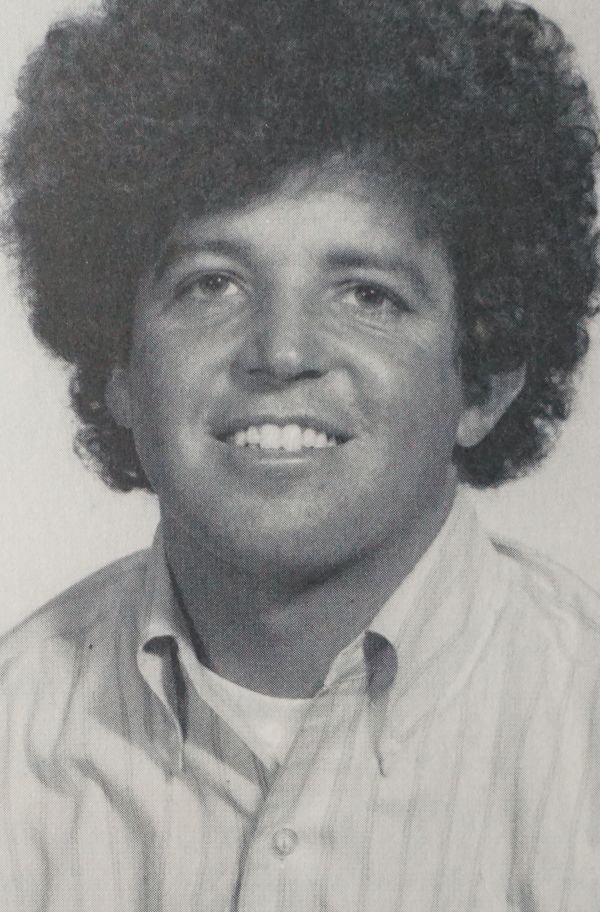
During his seven years with CRLA, Mo helped refine the model of community lawyering that remains at the heart of our work. He exemplified creative systemic advocacy informed by individual direct services and community goals, reflecting his mentorship by and partnership with legendary CRLA Community Worker Hector De La Rosa. The two cases that best illustrate Mo's contribution to CRLA's legacy are Diana v State Board of Education (1970) and Carmona v. Division of Industrial Safety (1975).
Diana resulted in ending the then-widespread practice of placing Spanish-speaking children in special education classes simply because they do not speak English. The case garnered national attention and demonstrated the power rural communities could have in promoting equity and creating benefit for many more people. It also laid the groundwork for CRLA's further litigation and policy advocacy for bilingual education.
For more on the case and its impact, I highly recommend reading The Soledad Children, which Mo co-wrote with former CRLA Executive Director Marty Glick about their experiences working on the case and the early years of CRLA's Salinas office.
In Carmona, Mo’s countless hours of work led to a ban on the use of El Cortito, which data suggest dropped farmworker back injuries by 34%. He wrote about the case in his 2004 book, The Struggle for The Health and Legal Protection of Farm Workers: El Cortito.
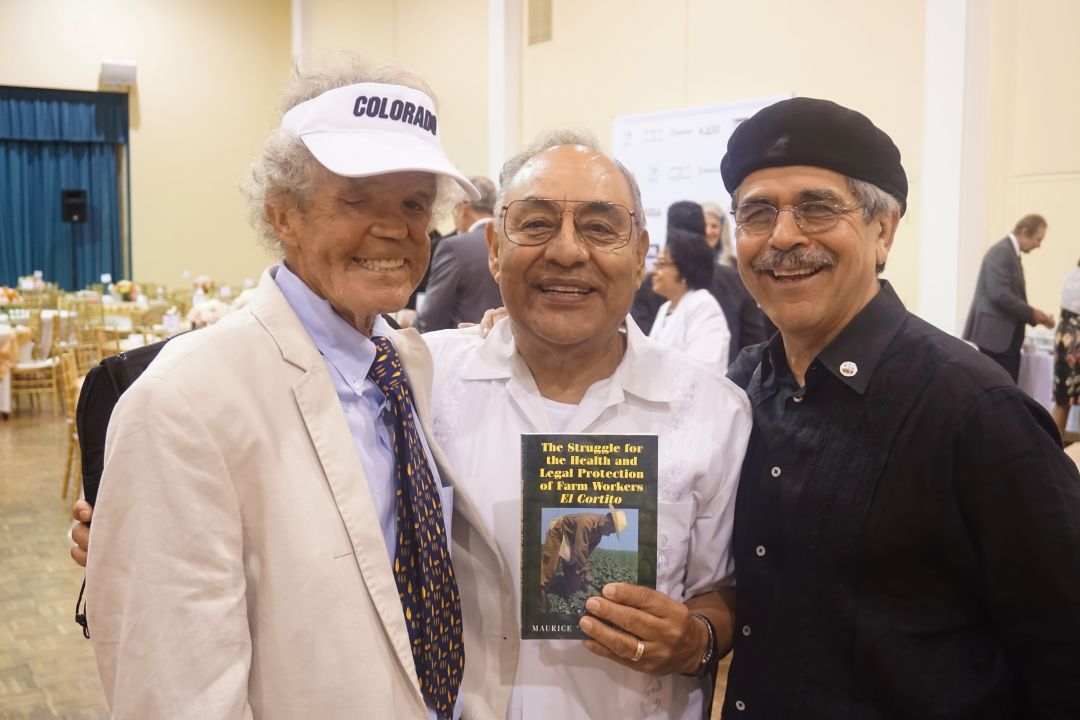
In photo, left to right: Mo Jourdane, Hector De La Rosa, and former CRLA Executive Director Jose Padilla.
After his time at CRLA, Mo went on to work for the recently created Agricultural Labor Relations Board where he continued to advocate for and enforce ag workers’ rights. In the course of his work there, he suffered a near-fatal car accident that put him into a coma, cost him an eye, and left him having to relearn how to speak.
But Mo found his voice again. He went on to serve as a judge and for the state Attorney General's office. Even after he retired, he traveled to schools to share with students the story of El Cortito and encourage them to take action for justice in their communities.
"A world shaped by Mo's work"
I can't speak to what it was like to work with Mo personally; his time at CRLA and mine are separated by a couple of decades.
I can speak to what it was like to grow up in a world shaped by Mo's work, a world where speaking Spanish at school didn't hold me back, where my dad could play with me unhindered by debilitating back injury, a world where I could find a model at CRLA for the kind of advocacy I wanted to do.
In 2023, as CRLA's new executive director, I was deeply honored when Mo and Olivia worked with us on a meet and greet event with CRLA supporters, featuring a sneak peek of a monumental mural their family facilitated in San Diego’s Chicano Park, “Victoria Contra El Cortito.”
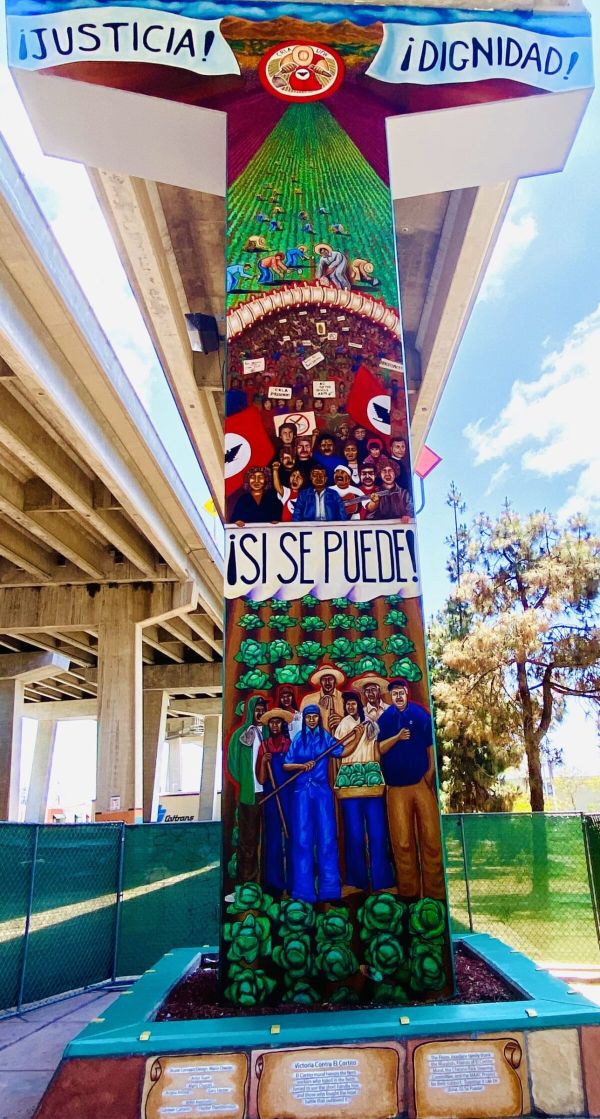
Mo spoke about how fitting it was to have this mural in the park where, back in the early 1970s, he was amazed at how many farmworkers had gathered to provide testimony for the El Cortito case, an important part of the advocacy.
We were also grateful to have Mo and Olivia join us again last year in Salinas for our 50th Anniversary Celebration of the El Cortito victory, especially understanding that Mo was already fighting the cancer that would take his life.
Rural Roots, Justice for All
What struck me most on both occasions was Mo’s emphasis that telling the story of El Cortito was not about nostalgia for the past, but about action in the present. His overarching message was that the work is unfinished, there is more to be done, because the root cause of injustice remains—the mindset that sees some people as disposable and less worthy of rights and protections than others.
To counteract that harmful mindset, we must ground ourselves in our own mindset that we can create lasting change. The El Cortito victory is proof of what’s possible when we—advocates and communities—believe in our agency as change makers.
Thank you, Mo, for living your life true to your values. Thank you for taking that job offer from CRLA and being a part of the historic impact by publicly funded civil legal services to push our nation closer to the promise of Justice for All. Que en poder descanse.